
Article body
Full article
Over the past two years, Chinese enterprises have rapidly adopted AI. Yet computing costs, alignment with business needs, attribution of agent value, and compliance review remain common challenges. Companies are now asking whether AI can run reliably within existing systems, leave a traceable record of its work, and deliver results that can be reviewed.
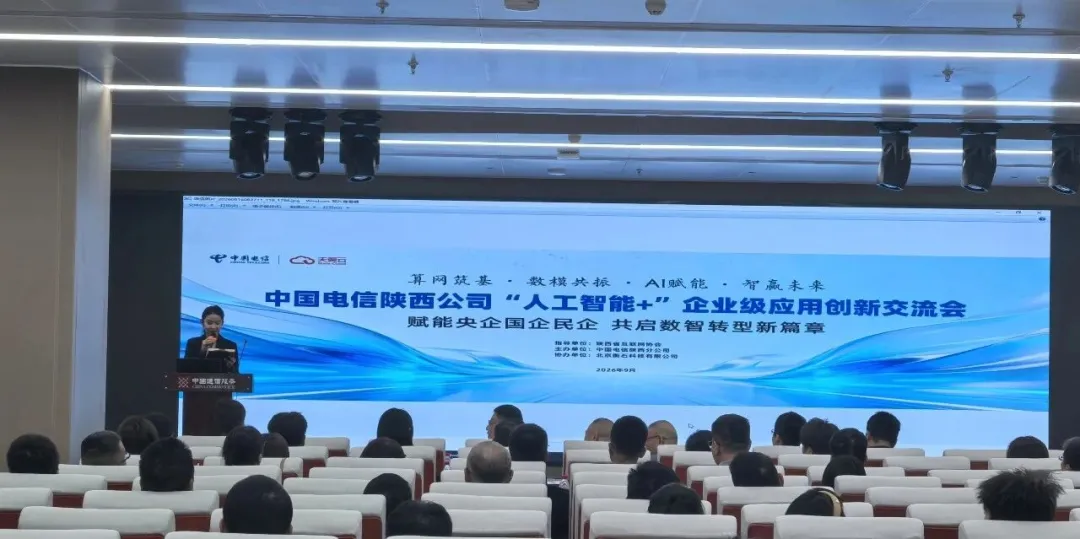
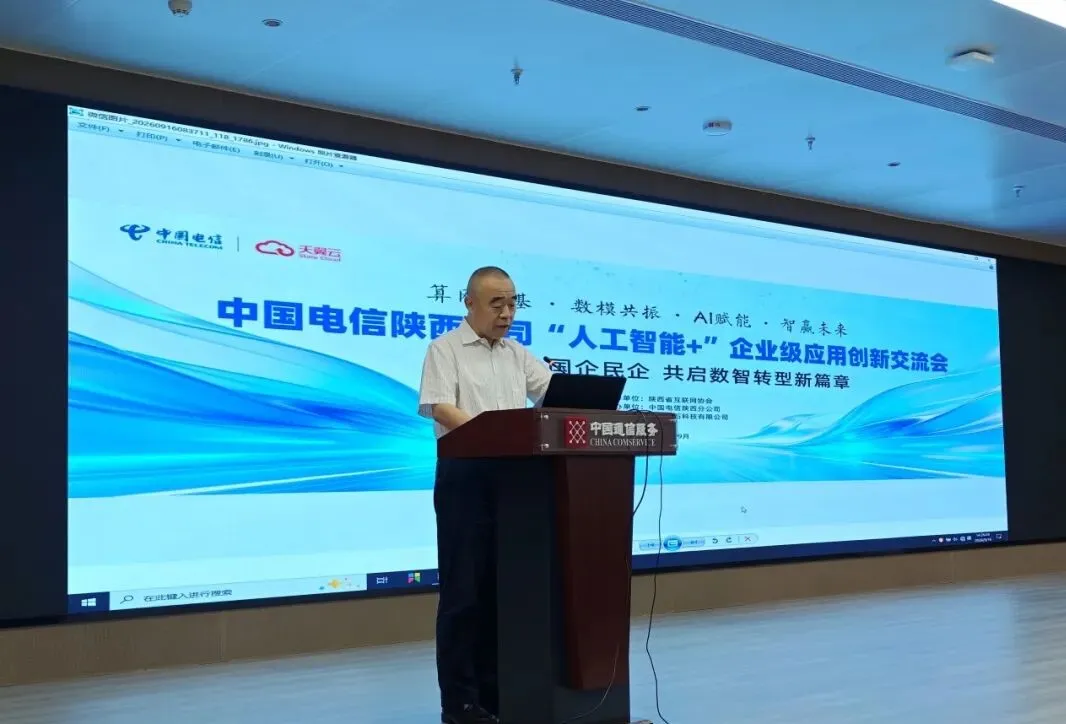
On September 16, Shaanxi Telecom’s “AI+” Enterprise Application Innovation Forum was held in Xi’an. Four speakers examined key steps in enterprise AI adoption: R&D digital employees, Token asset governance, a Token marketplace and field deployment engineers (FDEs), and the business operation of enterprise agents. One message emerged: as general model capabilities mature, the next area of competition is the ability to operate, deliver, and continually improve AI systems.
AI Must Enter Real Workflows
As the first speaker, Liu Chengzhong, founder and CEO of HENGSHI Technology, used the company’s latest product, HENGSHI JARVIS, to discuss how an R&D digital employee can enter an enterprise.
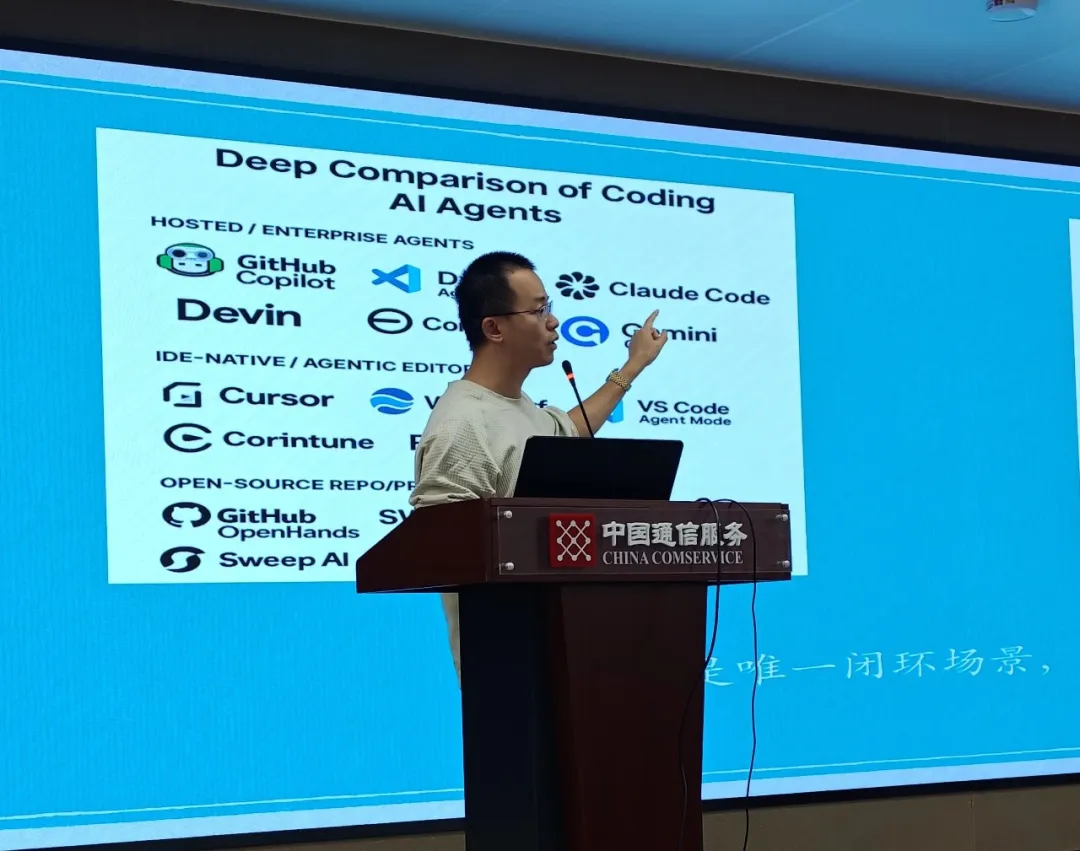
His experience comes from the development floor. Code generation is already a relatively mature AI capability, but submitted code must still pass through review, testing, release, and production verification. R&D efficiency is often lost at the handoffs between these steps.
Liu therefore positions JARVIS as a digital employee that can participate in the workflow. Within defined permissions and rules, it receives tasks, calls tools, advances execution, and records status and results in the team’s existing collaboration systems. R&D is its first use case because task goals, verification methods, and rollback paths are comparatively clear.
HENGSHI’s experience gave the discussion a practical starting point: enterprise AI must ultimately be judged by whether it delivers a specific piece of work.
AI Resources Need Governance
Chen Yunpeng, chief AI expert at Beijing Qingwang Intelligence, focused on the cost and governance of enterprise AI.
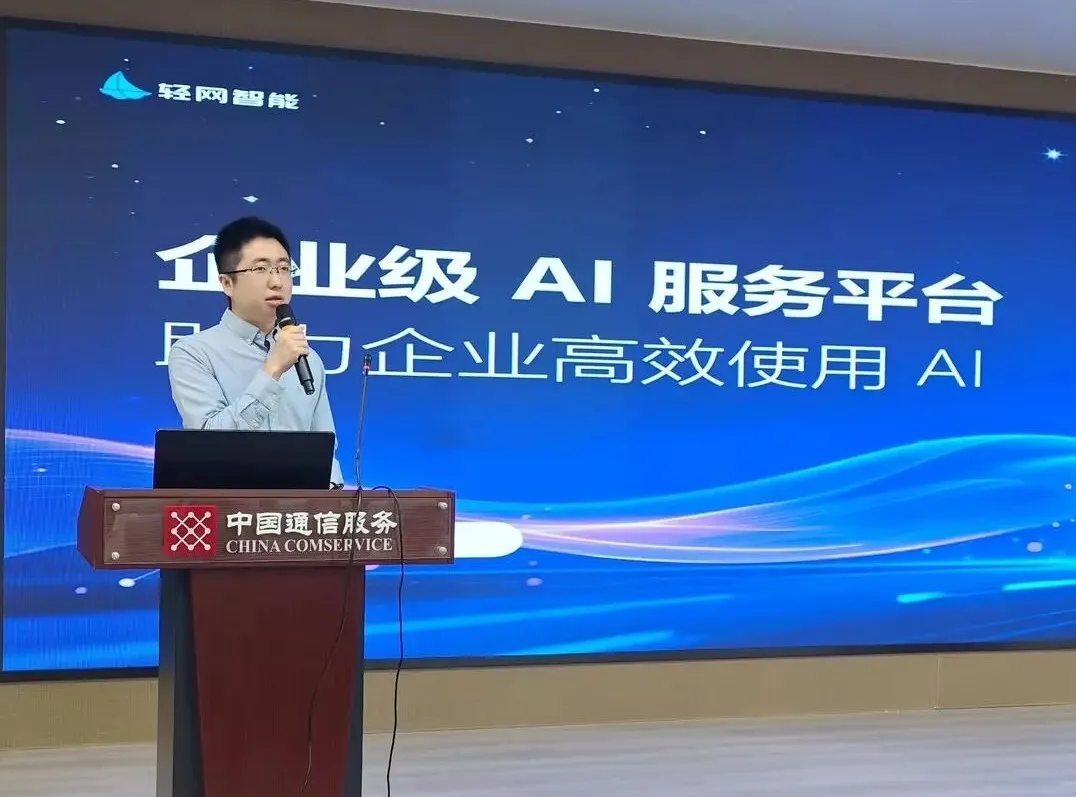
As model use spreads across departments and projects, API keys, budgets, permissions, and audit records can easily become fragmented. Enterprises need to consolidate usage, establish budget and quota rules, and keep records of sensitive content and critical operations.
Token asset governance provides the basic accounting needed before AI can scale. Companies need to see who uses resources, for which scenarios, and with what results before they can invest sustainably.
The same applies to R&D digital employees. Whether a code assistant or a business agent, task execution consumes model and computing resources and touches data, code, and system permissions. Governance determines whether AI can move from a limited pilot into daily operations.
Bringing Capabilities On Site Is Only the Start of Delivery
Ma Lan, director of Shaanxi Telecom’s AI and Big Data Operations Center, described its Token marketplace and FDE practices.
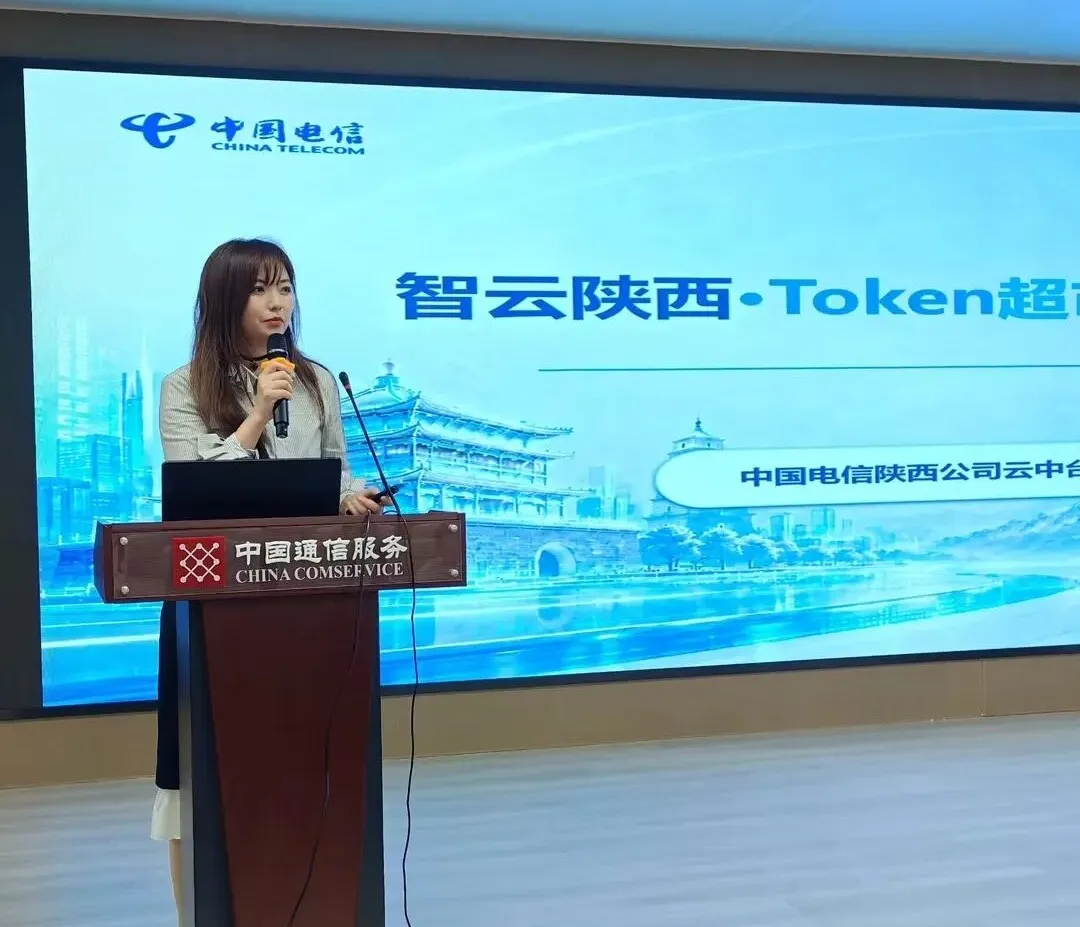
The Token marketplace organizes computing and model capabilities into services that can be used on demand. FDEs work with customers on site to understand processes, data conditions, and system interfaces, turning general capabilities into usable solutions.
The hard part of enterprise AI often lies in the final connection to work, rather than the model itself. A company can buy model capabilities, but processes, data, permissions, and people’s habits must be adapted to each situation.
That is why the forum brought operators, technology companies, and industry organizations together. Without infrastructure, product capabilities, and on-site delivery working together, AI struggles to enter real business operations.
Measure Investment by Business Results
Zhang Zhen, general manager of the Shaanxi office of China Telecom Artificial Intelligence Company, discussed “Token operations,” shifting attention from usage volume to business returns.
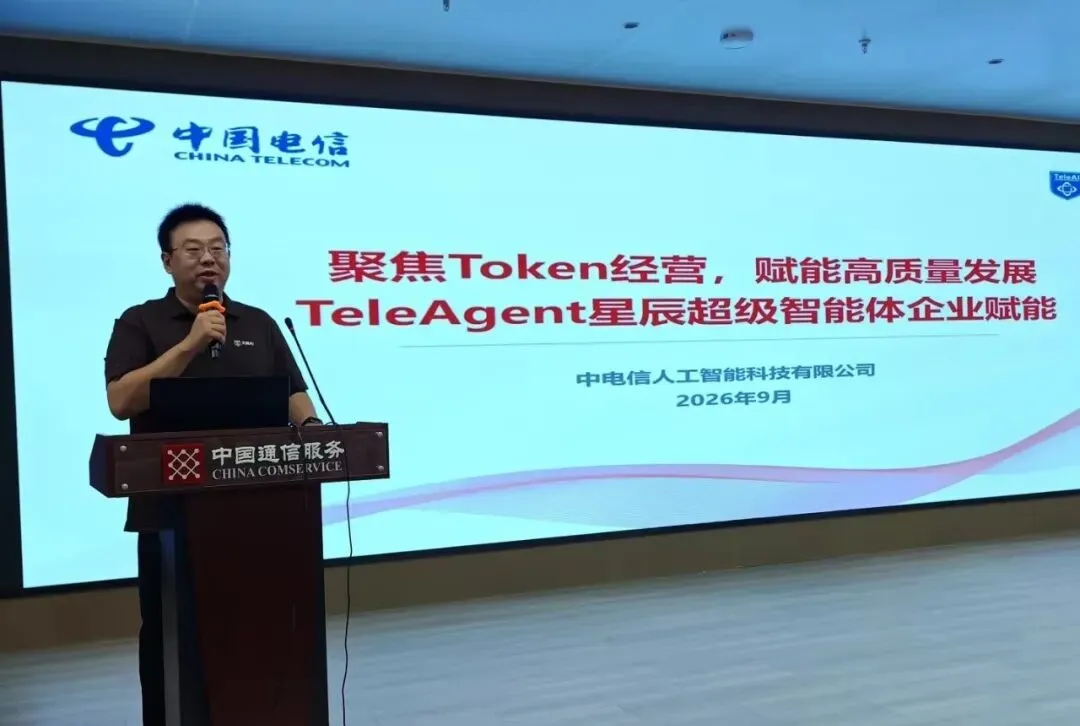
Companies paying to adopt models ultimately need to see changes in delivery time, service efficiency, revenue, or cost structure. Tokens become connected to a business outcome only when agents work within concrete processes in sales, service, R&D, and operations.
This gave the earlier presentations a common measure. Token governance keeps investment under control; the marketplace and FDEs bring capabilities to the workplace; R&D digital employees and other enterprise agents must complete tasks and produce results within specific workflows.
Shaanxi Internet Association Builds Support for What Comes Next
The forum brought supply, delivery, applications, and governance into one conversation. For local enterprises in Shaanxi, especially small and medium-sized companies upgrading digitally, AI adoption requires accessible resources, service teams that understand on-site needs, and people who can continue to learn and use new technologies.
The Shaanxi Internet Association said it would, under the guidance of industry authorities, promote the launch of a public service platform for internet collaboration among SMEs from the end of this year to early next year. The platform will bring services closer to Shaanxi’s industries. The association will also continue AI talent development and industrial security governance through its digital technology engineer training qualifications.
Platforms, talent, and ecosystems do not carry out transformation for a company, but they lower the barrier to taking the first step. They help resources meet real needs and give more enterprises the ability to bring AI into practical work.
From Tokens to digital employees, the forum placed multiple capabilities in one picture of enterprise AI. The next stage will test how well companies connect resources, scenarios, processes, and people.