
Article body
Full article
Summary. The HENGSHI Digital Employee learns how a company’s products, systems, and teams work by organizing enterprise knowledge and developing skills from its repositories. The company owns the resulting knowledge and methods, verifies the business model and delivery scope at key checkpoints, and puts those assets to work on real tasks.
When a company hands a requirement to a digital employee, it often has to explain whom the feature serves, which systems implement it, why an older design was retained, and who will accept the change. Experienced colleagues already know those relationships. New teammates and agents need a way to learn them.
The HENGSHI Digital Employee is built around a practical goal: letting enterprise experience inform the next task. HENGSHI’s tools and implementation methods help teams extract knowledge from authorized materials, working code, and previous changes. The result is a knowledge base, repository-level skills, and workflows the company can maintain.
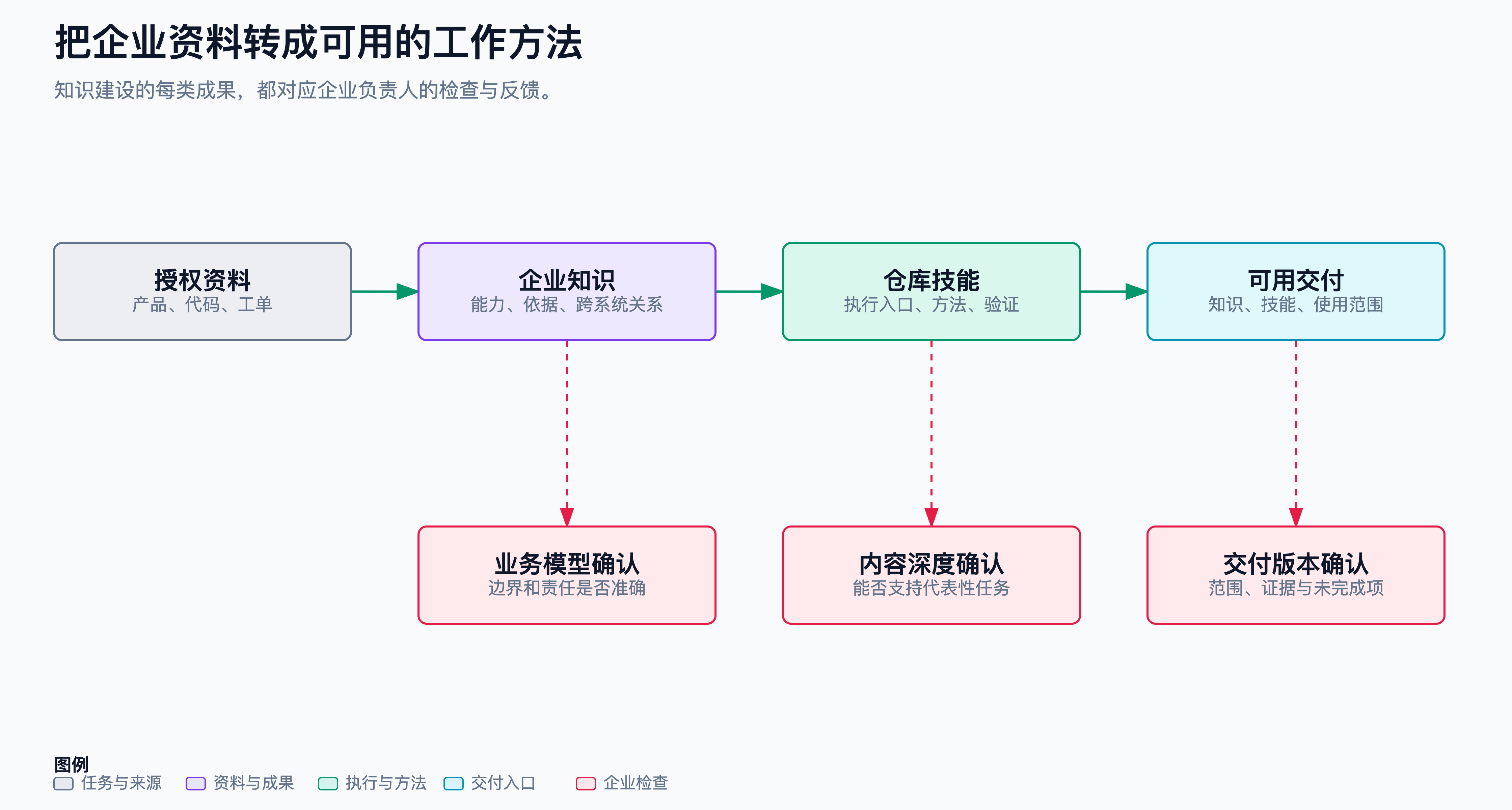
Figure 1. How source materials, knowledge, skills, and delivery fit together. The three checkpoints below the workflow apply to acceptance of the knowledge assets. Routine publication approvals follow their own processes.
1. Start With Materials the Company Already Has
Start with product documentation, code repositories, tickets, design records, and test materials. The company specifies what may be read, and the project checks what each source can establish. Product documentation explains goals and rules, code identifies where behavior is implemented, tests and runtime evidence show what happens, and review records capture decisions and trade-offs.
For a reporting feature, the product specification may define the scope of a filter, the code implements the query and display, and historical tickets record edge cases. The digital employee needs to connect those sources to tell whether new feedback concerns a product rule, how the feature is used, or an implementation defect.
When sources are missing or disagree, record what requires confirmation, the scope it affects, and the responsible owner. Verified material can still support well-defined tasks. Open questions stay visible with an owner or a route to resolution.
Record the Evidence, Scope, and Conditions for Revisiting a Claim
A note is useful when it says which decision it can support. “The metric uses payment date” needs a governing business rule and applicable version. “The API returns this field” needs a reference to the current implementation. A historical incident needs the conditions under which it occurred. Conclusions without sources and scope are easy to carry into the wrong setting.
Record who confirmed the business rule, where the implementation is maintained, what was checked most recently, and which changes call for a fresh check. When sources disagree, identify what each can establish and return to the authority for that rule. Keep unresolved differences open.
2. Five Kinds of Knowledge Guide the Next Step
The HENGSHI Digital Employee organizes enterprise knowledge into five related categories. Together, they explain the business capability, where to find evidence, which system to work in, and how to verify completion.
| Knowledge | What to record | How it helps |
|---|---|---|
| Business capabilities and modules | What the product offers, its boundaries, and who interprets the rules | Connect a request to the correct business area |
| Sources and evidence | The document, version, or system that establishes a current fact | Find the right place to resolve discrepancies |
| Repositories and delivery surfaces | The repositories that implement a capability and the interfaces that expose it | Identify where changes belong and which projects need coordination |
| Cross-system relationships | The callers, data, or displays affected by a module change | Check relevant dependencies and downstream effects |
| Business workflows | How tasks are received, handled, verified, and delivered, and who makes each decision | Turn analysis into action and acceptance |
A metric change, for example, calls for the authoritative definition, its implementation, its references, and the acceptance criteria. Recording those relationships reduces repeated searches and oral handoffs.
A Knowledge Directory Should Point to the Next Action
This directory tree illustrates how the five categories and project skills divide the work. The names are examples. Use the entry points supported by the company’s tools and agent when implementing the structure.
enterprise-knowledge/
  index.md                     # Start from a business question
  modules/                     # Capabilities and module boundaries
  sources/                     # Authoritative sources and verification
  repositories/                # Implementation and delivery surfaces
  cross-cutting/               # Cross-module and cross-system relationships
  workflows/                   # Intake, execution, verification, and delivery

project/
  AGENTS.md                    # Rules for working in this project
  skills/
    report-filter-fix/
      SKILL.md                 # Applicability and work steps
      references/
        verification.md        # Verification entry points and representative cases
If totals become incorrect after a store switch, start with the business module to find the rule and related systems. Once the owning project is clear, read its execution rules and verification entry points. Enterprise knowledge can link to implementation details at their source, and repository skills should follow the governing product rules.
3. Repository Skills Turn Project Experience Into Practical Instructions
Company-level knowledge helps the digital employee understand the business and choose a path. Repository-level skills guide execution within a project. Teams develop them from current code, previous changes, and work outcomes to capture key modules, entry points, and verification methods.
A usable engineering skill answers five questions.
- Where to start. Identify the relevant modules, main entry points, current business rules, and evidence to read first.
- How to make changes. Describe established implementations, dependencies, and behavior to preserve.
- How to check the work. Specify the appropriate builds, tests, or hands-on checks and the evidence that determines the result.
- How to deliver. Identify the review target, accompanying documentation, downstream coordination, and acceptance criteria.
- When to update the method. Name interface, permission, or workflow changes that require rechecking the skill.
A skill for approval status, for example, should identify who writes the status, which events advance it, how duplicate or late results are handled, and where to verify the final state. Those details help the next person or agent make a decision.
Skills guide execution, while tests, CI, and approval mechanisms in the business system verify important constraints. Companies can choose the level of verification according to the risk of the change.
Write Skills That Can Be Followed and Verified
A skill connects applicability, required evidence, authorized scope, and completion criteria. This example shows the outline of a SKILL.md for filter defects. In a real project, add verified dependencies, entry points, and commands, then install it in the format the agent expects.
---
name: report-filter-fix
description: Diagnose discrepancies between store filters and sales totals
---

# Applicability
Confirm the target version, reproduction steps, and expected total before proceeding.

# Sources
Check current product rules, repository entry points, and relationships among filtering, querying, and display. Record confirmed rules, historical observations, and open hypotheses separately.

# Execution
Reproduce the original behavior, then identify the module responsible. Preserve metrics, access rules, and entry-point behavior outside the change request.

# Verification and delivery
Use the repository’s verification entry points. Check the original and relevant neighboring cases. Deliver the change, evidence, formal review reference, and unfinished work.

# Maintenance
Recheck this skill when the filter contract, access rules, or verification entry points change.
“Reproduce first” is a starting point. A useful project skill says where to observe the trigger, how to tell a filter defect from a display defect, what verifies the fix, and when the skill does not apply. The steps must fit the actual project.
Existing permissions, interface validation, tests, and review help enforce important constraints alongside the skill. After a skill changes, run representative tasks through those checks again.
4. Three Checkpoints Let the Company Verify That the Knowledge Is Usable
The HENGSHI implementation method includes three human checkpoints. The implementation team checks for omissions first. Company owners then use the evidence to confirm that the business understanding and the delivered materials fit actual operations.
First, confirm the business model. Check product capabilities, module boundaries, and responsibilities. Owners can correct similarly named modules with different roles and surface business constraints missing from the material.
Second, confirm the depth of the content. Check that the knowledge supports representative tasks and documents execution entry points, downstream effects, exception handling, and verification. Validate it through real work.
Third, confirm the delivery version. Verify the scope, the knowledge and skills available to users, the verification records, and remaining work. The company can then accept the relevant deliverables and define their initial scope of use.
These checkpoints apply to the quality of the knowledge assets. Routine code merges, content publication, and production changes follow their established authorization and approval processes.
Use a Task to Test the Depth of the Knowledge
Ask someone who did not build the knowledge base to handle a representative problem. Can they find the current rule, locate the implementation and callers, explain an exception path, and provide verification commensurate with the risk? If the knowledge falls short, identify the missing relationship or entry point.
A checkpoint covers the scope reviewed on that occasion. Revisit affected areas when business models, project versions, or skills change, and evaluate other modules and newly added material within their own scope.
5. Two Ways to Put the Results to Work
Companies can install verified knowledge and skills in an existing agent environment. Staff can then start tasks from their familiar terminal or development tools, adding enterprise knowledge to the workflow they already use.
For centralized intake and ongoing tracking, companies can connect the HENGSHI Digital Employee’s managed runtime. It manages tasks, run records, workspaces, and delivery. Both approaches can use the same maintained enterprise knowledge and methods.
Runtime integration and knowledge development can proceed independently. A verified entry point can start taking well-defined work while the team deepens its product and repository knowledge. Real tasks then show how well the two fit together.
6. What the Company Keeps and How It Maintains It
For the scope it has implemented, the company should retain a knowledge repository, repository skills maintained with the code, executable workflows, and traceable implementation and verification records. When personnel or sessions change, the next person or agent can check those records and the current state before resuming.
Operational changes and human corrections guide maintenance. Update project methods in the owning repository, update cross-system relationships in the enterprise knowledge base, and retain reusable materials with their source, version, and audience. Reuse knowledge that already covers the case to prevent conflicting rules from accumulating.
Start with one product module and one workflow. Verify the knowledge, skills, and performance on real tasks before expanding. This allows the HENGSHI Digital Employee to learn the company’s business and collaboration patterns while the team retains control of the content, versions, and maintenance responsibilities.
Make Corrections Where the Knowledge Is Maintained
Suppose clearing a filter and selecting all values are found to have different meanings under access restrictions. Confirm the rule with the business owner, then check the implementation and verification cases. Update the product rule in the business documentation, the execution procedure in the repository skill, and the downstream impact in the cross-system knowledge. Keep the complete handling record with the task.
On the next similar task, check whether those materials still apply and observe whether the person or agent can follow the right method. The value of the knowledge becomes visible in less repeated investigation and more reliable delivery. See the HENGSHI enterprise AI agent operations platform for related product information.
Founded in 2016, HENGSHI develops enterprise analytics for the Data and AI era, with a focus on Agentic BI. Its portfolio combines the HENGSHI SENSE enterprise analytics platform, the HENGSHI Digital Employee, the HENGSHI CLI execution engine, and the privately deployed HENGSHI BOX control environment. Through its Powered by Hengshi ecosystem and a decade of BI experience, HENGSHI works with software vendors across industries to support trusted, private AI analytics for enterprise operations and decision-making in manufacturing, financial services, retail, government, and other sectors.