
Article body
Full article
Summary. The HENGSHI Digital Employee connects enterprise knowledge, role-specific skills, and task execution. It supports requirements analysis, issue resolution, code review, and documentation maintenance. Companies can give it their business rules and work methods, define permissions and acceptance criteria, and let it carry a task forward with a traceable record and verifiable outputs.
When a customer issue reaches an engineering team, the work usually involves gathering information, identifying the version, reproducing the behavior, changing code, testing, and reviewing the change. Each step needs business context: how the feature was designed, which systems it affects, who accepts the result, and how to deliver it.
The HENGSHI Digital Employee helps companies put AI to work in existing business processes. HENGSHI provides tools and implementation methods to organize knowledge, define skills, and connect business tools. Agents then carry out individual tasks. Teams can maintain their own knowledge and processes, track progress, inspect results, and arrange follow-up work.
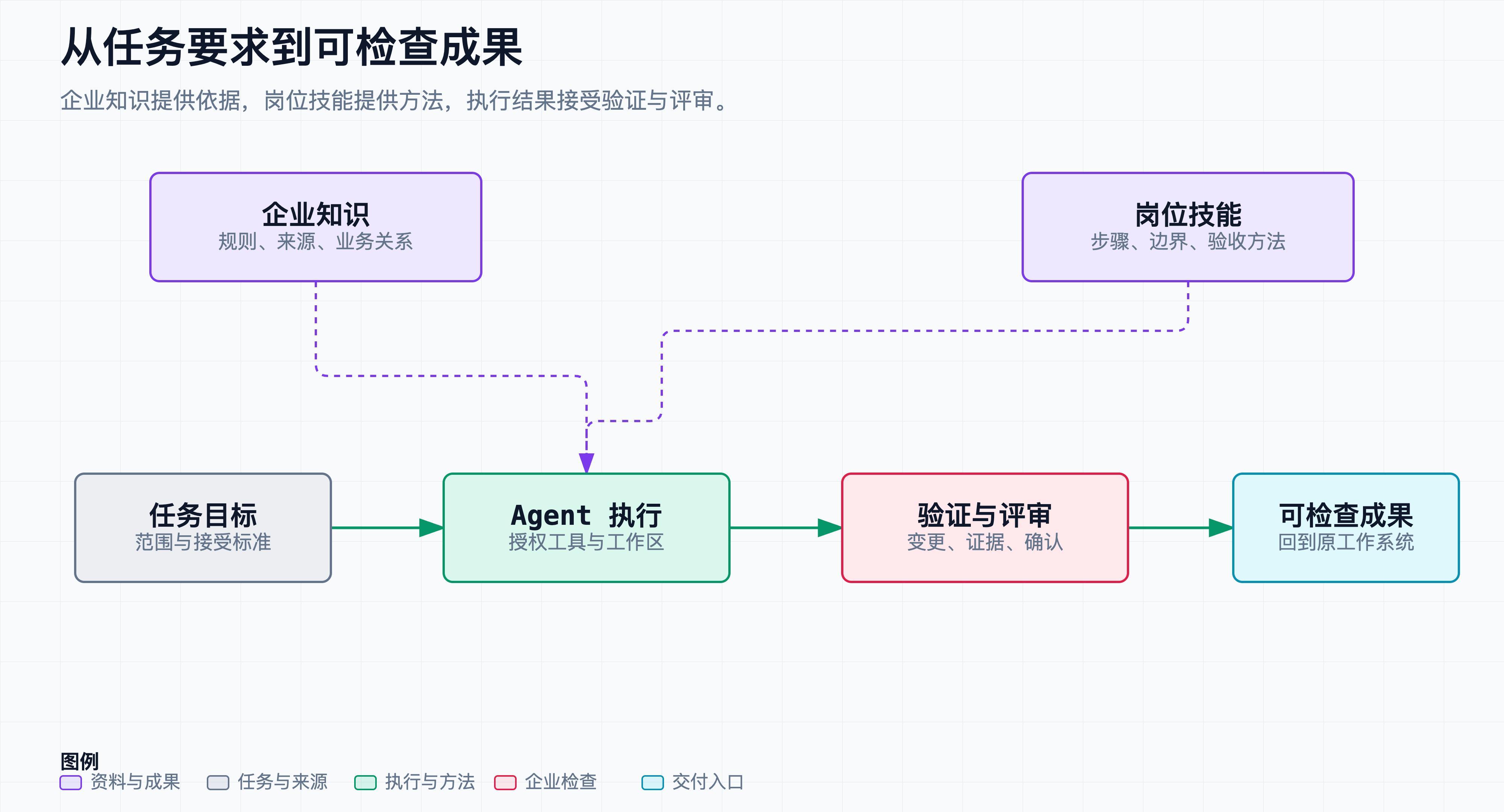
Figure 1. Knowledge supplies the evidence, skills supply the method, and execution produces work the team can review. The diagram illustrates the relationships.
1. Start With Engineering Work Inside Existing Workflows
Software engineering is a current focus of the HENGSHI Digital Employee. For an issue or requirement, it can consult authorized product materials and code, assess impact, modify files, run appropriate checks, and submit changes with an explanation for review.
HENGSHI provides methods for issue handling, feature delivery, requirements review, documentation, and release notes. Companies can adapt them to their work systems, branching rules, and approval requirements.
| Work area | What the digital employee can help with | What the team can inspect |
|---|---|---|
| Fixing defects | Organize feedback, confirm versions, reproduce the issue, investigate, modify code, and verify the fix | Diagnosis, code change, verification records, and review materials |
| Delivering features | Review requirements, identify ambiguities, assess cross-module effects, and implement changes | Implementation, tests, and explanations tied to the request |
| Documentation and releases | Complete user guides, prepare release notes, and document upgrades | Documentation aligned with the feature and version |
| Content and knowledge | Find materials, organize research, prepare copy, and register reusable assets | Documents and knowledge assets with sources, versions, and applicable scope |
What the digital employee can execute depends on connected systems, tools, and permissions. Business owners set objectives and acceptance criteria. The digital employee performs the authorized research, analysis, production, and checks. Review and publication follow the company’s existing rules.
Make the Goal, Authorization, and Deliverables Explicit
“Take a look at this issue” can start a conversation. Before execution, specify which behavior should be restored, which evidence exists, what may change, and how to evaluate the result. With that information, the digital employee can organize research, implementation, and verification without repeatedly collecting context from colleagues.
This sample brief can help teams agree on an engineering task. Business definition changes, code merges, and production releases are reserved for their owners in this example. Adapt it to the company’s process.
task: Fix an unexpected report filter result
business_goal: Keep sales totals aligned with the filter after a store switch
inputs:
  - Issue, target version, and reproduction steps
  - Redacted sample and verified expected total
scope:
  allowed: [Analyze relevant code, change the task branch, run agreed checks]
  owner_decision: [Change business definitions, merge code, release to production]
acceptance:
  - Reproduce the original issue and verify the expected result after the fix
  - Check store switching, clearing filters, and the no-data case
deliverables:
  - Change summary and review reference
  - Verification records for the relevant version
  - Unfinished work and next steps
Tie acceptance to specific behavior. For a store switch, list the account, store scope, date, and expected value. For a passing test, identify the revision and scenarios covered. That gives reviewers a shared way to evaluate the work.
2. Enterprise Knowledge Provides Business Context
The knowledge base is built around the company’s actual operations. Product descriptions, designs, code, tickets, and review history provide different evidence. The implementation process organizes them into searchable capability maps, source indexes, and records of dependencies and responsibilities.
For a metric calculation problem, identify the metric definition the owner approved, how the current code calculates it, and which dashboards or APIs reference it. When accounts conflict, check with the relevant owner or system and keep open points visible.
Enterprise knowledge helps the digital employee find the evidence for a decision and the right place to act. Companies can assign maintainers and record sources, versions, and applicability so later tasks can rely on verified experience.
Record Business Rules, Implementation Observations, and Open Questions Separately
The same filter anomaly can originate in the interpretation of a metric, a query condition, a data relationship, or display logic. Product rules establish expected behavior. Code and logs show what the system currently does. Tests show what was observed under a set of conditions. Each supports a different judgment.
When code disagrees with a confirmed rule, investigate the cause. When the only source is a pending proposal, keep its status visible. That helps the digital employee avoid making further changes based on an unverified assumption.
3. Role-Specific Skills Make Work Methods Repeatable
With the business context in hand, the digital employee needs a method it can follow. HENGSHI defines skills for defect resolution, requirements review, documentation maintenance, and other work. A skill describes when it applies, what to do, how to verify work, and what to deliver.
Repository-level skills explain how a specific project builds, tests, and delivers, which modules own key behaviors, and what related functionality to check after a change. Teams can maintain methods alongside code and documentation instead of relying on oral handoffs.
Reuse existing methods where they apply and keep one-off handling in the task record. When the team discovers a recurring issue or an effective new practice, verify and review it before updating the relevant skill.
4. Ongoing Execution Leaves a Record of Progress and Results
Companies can load knowledge and skills into an existing agent environment or use the HENGSHI Digital Employee’s managed runtime for intake and continued execution. The runtime tracks runs, workspaces, and result delivery, making progress, interruptions, and unfinished work visible.
An integration can use an existing engineering system or messaging channel. The digital employee receives the task there, uses authorized tools, and writes back to the original ticket, review, or conversation as configured.
Check execution results, verification, business acceptance, and delivery separately. A code change, passing tests, and acceptance by the owner each have their own evidence. The runtime and the original business systems retain those facts.
5. How a Customer Issue Can Be Assigned to the Digital Employee
Consider a customer report that a report shows an unexpected result under a particular filter.
- Confirm the goal and evidence. Read the version, steps, and observed behavior, locate the applicable rule, and fill information gaps needed for the assessment.
- Find the owning module. Use enterprise knowledge and repository skills to inspect the relationships between filtering, queries, and display.
- Make and verify the change. Change the implementation within the authorized scope. Check the original problem and relevant neighboring behavior.
- Submit reviewable work. Describe the change, verification results, and outstanding items in the team’s established review and delivery process.
- Capture what can be reused. Update the relevant knowledge or skill with confirmed issue patterns and methods.
The steps vary by project. The relevant owners decide business trade-offs, permission changes, and production releases. The digital employee continues with the work it is authorized to perform.
What a Reviewable Delivery Summary Can Contain
After a code change, colleagues who were not part of execution should still be able to evaluate the result. This example shows how to organize a delivery summary. Fill it with the actual change, verification records, and review references.
## Changes
State the conditions that triggered the problem, its cause, and the behavior addressed.

## Verification
Name the target version, original reproduction, related cases, and observed results.

## Deliverables
Link to the review, documentation, or other formal results.

## Outstanding items
Distinguish remaining checks, pending business decisions, and work requiring authorization.

## Next steps
Identify who should review, accept, or continue the work.
The summary gives owners direct access to the evidence needed to make an acceptance decision. They can identify a specific gap and continue the same task if more work is required.
6. How to Get Started
Start with work whose boundaries are clear, such as defects in one product module or documentation for a set of features. Define source access, tool permissions, owners, and acceptance criteria, connect the required entry points, and refine knowledge and skills through real tasks.
As use expands, the company continues to maintain its knowledge repository, role-specific skills, and workflows. HENGSHI SENSE and HENGSHI CLI can also support workflows for data analysis and BI operations within verified and authorized capabilities.
Evaluate the digital employee by the results the business accepts, human effort needed to address gaps, quality of delivery, and reuse of knowledge. These measures help determine which tasks to assign on an ongoing basis and where more knowledge or better tools are needed.
Measure Effort and Value With a Real Task
A pilot can start with frequent tasks that have adequate documentation and readily verifiable results. Observe comparable tasks over time. Record acceptance, manual additions, and causes of rework to determine whether the knowledge and skills reduce repeated work. Run counts, generated words, and lines of code are activity measures and do not establish hours saved.
Expand to more modules and task types once the workflow runs reliably. This gives the company a way to see whether better material, clearer methods, or improved tools and permissions contributed to the outcome, and to retain what worked.
See the HENGSHI enterprise AI agent operations platform for related product information. The task and delivery templates illustrate methods. They do not describe measured customer results.
Founded in 2016, HENGSHI develops enterprise analytics for the Data and AI era, with a focus on Agentic BI. Its portfolio combines the HENGSHI SENSE enterprise analytics platform, the HENGSHI Digital Employee, the HENGSHI CLI execution engine, and the privately deployed HENGSHI BOX control environment. Through its Powered by Hengshi ecosystem and a decade of BI experience, HENGSHI works with software vendors across industries to support trusted, private AI analytics for enterprise operations and decision-making in manufacturing, financial services, retail, government, and other sectors.