
Article body
Full article
A knowledge base holds 800 files. An employee asks who can approve an expense while the department head is traveling. The digital employee finds a policy still in force, a pending draft and a historical record of an emergency substitution. All three are related. A usable source still needs to match the company, process, effective date and current authorization. This example shows a practical challenge in operating enterprise knowledge. Beyond finding relevant material, an organization must identify what can support the decision and who can resolve a missing answer.
The HENGSHI Digital Employee connects enterprise knowledge, role-specific skills and task execution. Teams can identify the business objects and authoritative sources, then capture procedures and acceptance criteria in skills for authorized tasks. HENGSHI’s practice also draws on product documentation, repositories and history, distinguishing formal decisions from one-time task records. For approval questions, start with how the organization decides the rule before configuring retrieval and task entry points.
1. Identify how knowledge can fail
| Failure | What it looks like | Where to fix it |
|---|---|---|
| Out of date | Semantic search retrieves last year’s policy or a draft that is not yet effective | Record publication status, validity dates, supersession and applicable organization |
| No owner | The wiki, training slides and tickets disagree | Assign an owner and authority to each decision, and verify conflicts in context |
| No decision rule | A policy names an approver but gives no path when that person is unavailable | Add needed authorization checks, branches, human confirmation and evidence to the skill |
| No execution evidence | A plausible name is given with no way to confirm current authorization | Record authorization state, time checked and rule version |
Start with recurring work. An expense policy can determine which categories permit delegation. The workflow system can verify whether someone has an active delegation. Past tickets explain exceptions. Placing all three in a similarity and recency ranking can elevate training material or an exception into a decision rule. “What should we do today?” and “Why did we do that then?” also have different effective dates.
2. What knowledge, skills and task records each supply
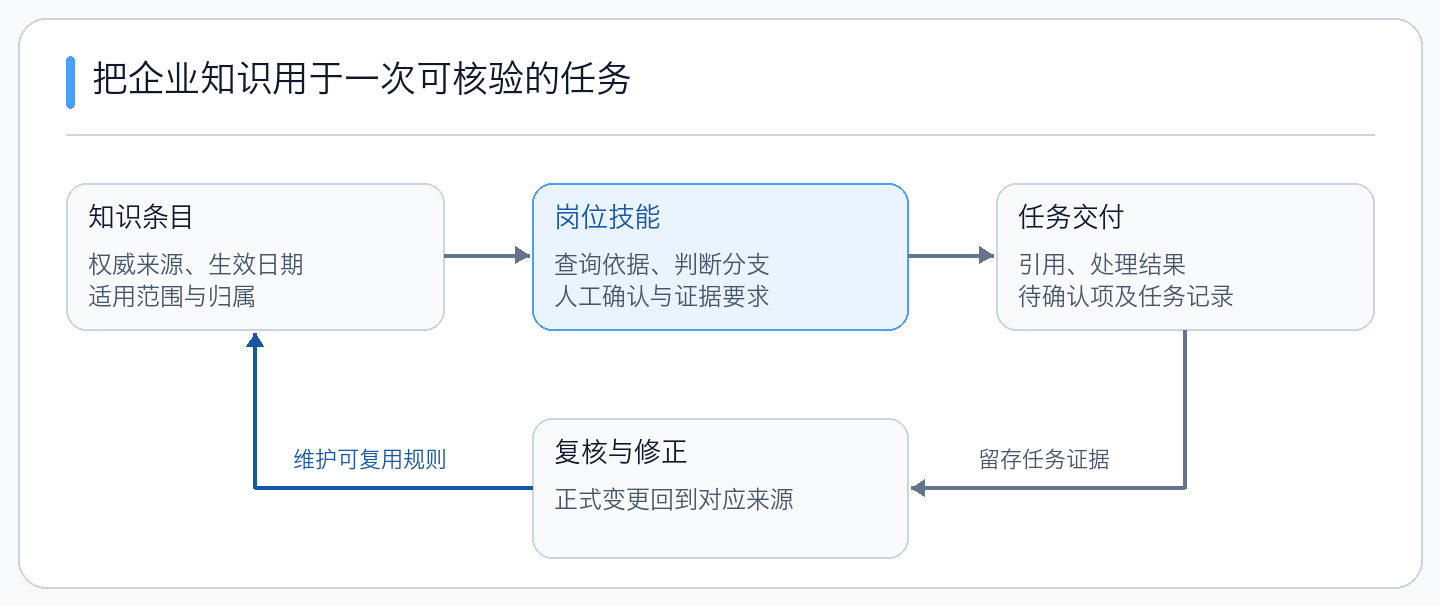
Figure 1. How knowledge enters a task and how formal revisions return to the owning source.
Knowledge identifies an authoritative basis
A knowledge item needs scope, owner, source, validity dates, key decisions and supersession. For expense delegation, the finance process owner owns the rule, the publishing channel supplies the current policy and the workflow system holds actual temporary grants. Effective dates and scope should be available to search and review. This illustrative YAML can inform documents or table fields.
topic: Delegated expense approval
owner_role: Finance process owner
scope:
  entity: Example Company One
  process: Domestic travel reimbursement
state: active
effective_from: "2026-11-01"
sources:
  policy: Issued expense management policy
  delegation: Active grants in the workflow system
decision:
  when_owner_unavailable: Check the policy and grant against the application date
  when_delegation_unknown: Refer to the finance process owner
evidence:
  - Policy version and effective date
  - Time and scope of the grant check
  - Decision and reviewer
Skills describe how to handle a type of task
Write role expertise as verifiable steps. Confirm company, expense type and application date. Retrieve the valid policy and delegation for that scope. If the owner is absent and a valid delegate exists, give the workflow entry and supporting evidence. If authorization cannot be checked, provide the confirmed policy and mark the individual approver pending. For conflict across organizations, choose the authority based on scope. Refer unresolved cases to the rule owner. Permissions, output rules and execution authorization should distinguish explaining the process from actually submitting a request.
HENGSHI Digital Employee skills can use existing business workflows and authoritative systems. The published HENGSHI JARVIS method links knowledge indexes, workflows and deliveries and governs skill versions and releases. A skill needs traceable sources and acceptance cases. Refer unresolved decisions to the relevant owner and record evidence and open items.
Task records document a particular outcome
An emergency approval agreed in a meeting should record the documents it covered, the authorizer and expiry. When wording recurs, a prior exception can be mentioned and its relevance checked. The formal policy still governs routine decisions. A one-time practice becomes reusable knowledge or a skill change after the owning team reviews it and makes it effective. Store personal data, expense details and operational credentials according to policy. Knowledge items should record shareable rules and where to find the source.
3. Enforce permissions, dates and authority in retrieval
In a pilot, scope sources by identity, organization and business process, filter by date and publication state, then run semantic retrieval. Judge whether the remaining candidates carry enough authority to answer. An expense filed November 2 can use a policy effective November 1. A delegation valid November 5 through 7 does not cover it, even if the phrase matches. Determine the responsible approver from the delegation record checked during execution.
For conflicts, check each source’s applicability and dates. A draft can coexist with current policy. Sales and customer success can have different definitions of customer tier. Escalate conflicting authorities that claim to govern the same scope and period. Supply the conflicting sources and open decision, and correct the rule through the formal channel. Test whether the agent can state what it verified and that an authorization record could not be found.
4. Verify knowledge with real tasks
| Acceptance case | Expected behavior | Evidence |
|---|---|---|
| A draft more closely matches the wording | Answer from the published rule effective on the application date | Official version, dates and excluded draft state |
| Two subsidiaries use the same process name with different rules | Use the confirmed entity and ask if it is missing | Entity, process and cited version |
| The policy permits delegation but no grant can be found | Cite policy and mark the approver pending | Live lookup status, open item and owner |
| A temporary exception was approved previously | Describe its scope and evaluate the current request independently | Exception record and current rule |
| The user cannot access approval grants | Return shareable policy and the authorized follow-up path | Test identity, permissions and actual response |
HENGSHI’s knowledge method includes three human checks. Business owners verify the process model, responsibilities and sources. Role holders use realistic tasks to see whether the material supports finding the right entry point, making decisions and handling exceptions. The delivery owner verifies scope, version and remaining items. In expense approvals, test active, expired, missing and cross-company authorizations separately and record whether the right source and human handoff were used. Track the rate of correct use of valid evidence, correct handoff and human correction. Report rates by question type using cases with reference answers as the denominator.
5. Send corrections back to the owner
After a rule changes, the policy owner records the effective date and supersession, then checks retrieval and skills. Fix an incorrect field in its authoritative field definition or model. Fix a missed expiry check in the skill and regression question. Keep a one-time exception in the task record. Knowledge operators can review new conflicts, expired entries and corrections weekly and pass updated material and skills to the Digital Employee after retesting.
An expense approval pilot can connect source indexing, authority checks, human decisions and delivery evidence in a small workflow. Reuse the acceptance approach for purchasing, support or operating reviews, with new authorities, roles, execution boundaries and feedback paths for each process. File count measures intake. A digital employee gains an operational capability when role holders can verify the answer against the applicable rule and repeat the correct action after a change.
About HENGSHI Technology
Founded in 2016, HENGSHI Technology develops Agentic BI for the Data+AI era. Its enterprise analytics platform, HENGSHI SENSE, works with the HENGSHI Digital Employee, HENGSHI CLI execution engine and HENGSHI BOX for private deployment. Drawing on a decade of BI experience and the Powered by Hengshi ecosystem, HENGSHI helps software vendors and enterprise groups in manufacturing, finance, retail and government deploy trusted AI analytics in their own environments and use them for business decisions.